Badge Buffs: How In-Game Milestones Align With Higher Odds in Accessory Prize Pools Across Mobile and Console Circuits
Written by Sage Foster · Nov 12, 2026
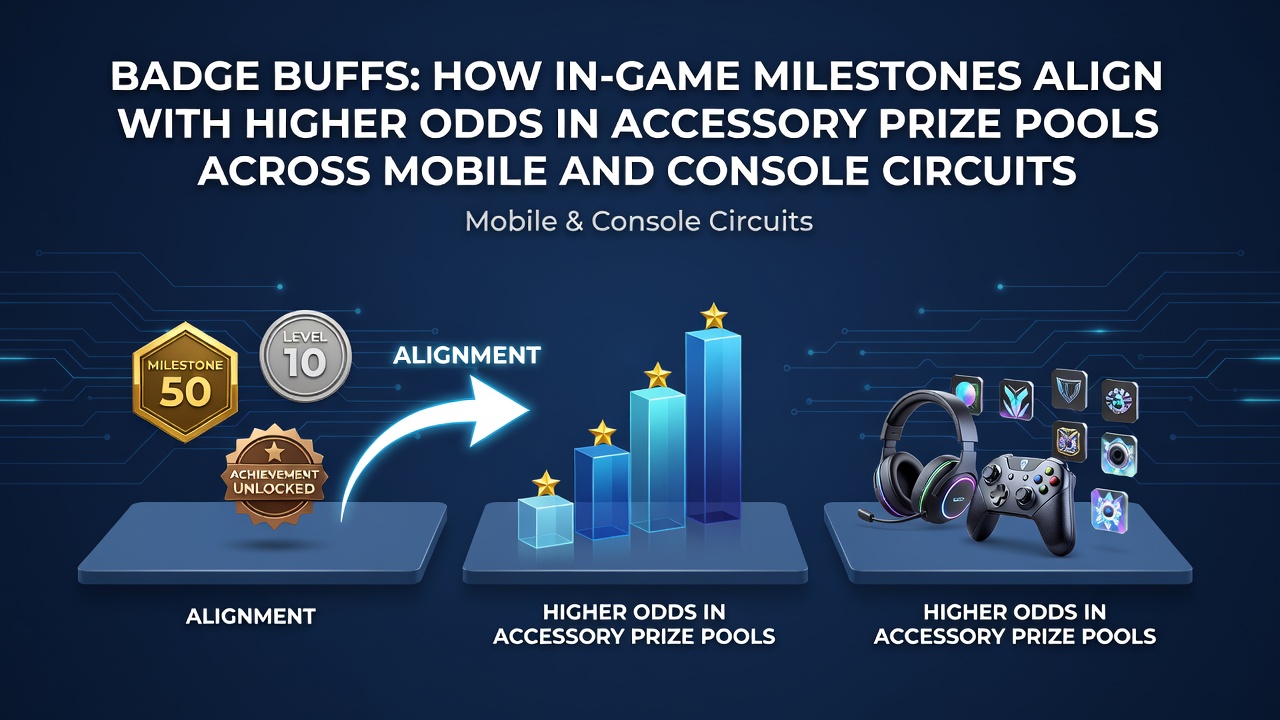
Badge Buffs: How In-Game Milestones Align With Higher Odds in Accessory Prize Pools Across Mobile and Console Circuits
Badge systems in mobile and console games create structured pathways where players accumulate milestones that connect directly to weighted entries in accessory prize pools, and these alignments appear across multiple circuits with measurable patterns in participation and distribution outcomes. Observers note that developers integrate badge achievements into sweepstakes mechanics so that reaching specific thresholds increases the probability of selection for items such as controllers, headsets, and custom peripherals, while basic entries remain available to all participants.
Mobile Game Circuits and Milestone Weighting
Many mobile titles track cumulative progress through badges that represent completed challenges or time-based objectives, and these records feed into backend systems that adjust odds for accessory draws. According to figures from the Entertainment Software Association, mobile gaming accounted for over 60 percent of global game revenue in recent cycles, with prize pool integrations appearing in titles that maintain active user bases exceeding several million accounts. Data shows that players who unlock higher-tier badges submit entries at elevated rates, and the weighting mechanism assigns multipliers that scale with milestone completion rather than uniform random selection alone.
Platform operators report that such systems operate under standard contest regulations enforced by bodies like the Federal Trade Commission in the United States, where disclosure of odds adjustments remains a requirement for promotional events. In November 2026, several major mobile publishers adjusted their badge-to-pool linkages following seasonal events, resulting in documented shifts in entry volumes that aligned with milestone unlock timelines rather than external advertising pushes.
Console Platform Patterns and Cross-Regional Participation
Console ecosystems apply similar milestone structures through achievement systems that log progress across single-player and multiplayer modes, then route those records into periodic accessory giveaways. Researchers at academic institutions tracking digital entertainment have documented correlations between badge counts and submission success rates, with console data indicating that participants holding five or more relevant badges receive adjusted probability factors in the 1.5x to 3x range depending on the pool size. These adjustments occur without altering the total number of prizes distributed, focusing instead on how entries are tiered before random selection.
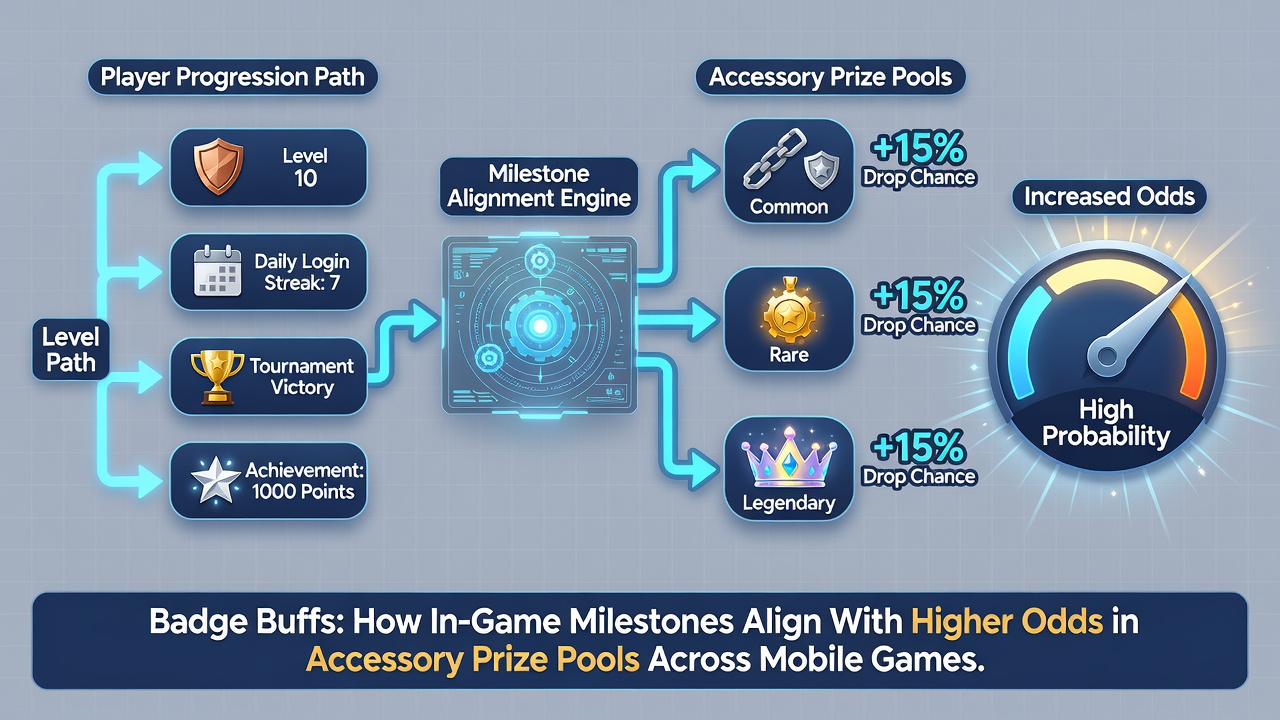
Cross-regional circuits reveal additional layers, as European regulators including the Australian Competition and Consumer Commission have reviewed how console manufacturers disclose these mechanics to users in multiple territories. Participation trends indicate that console players in regions with stable broadband infrastructure maintain higher average badge completion rates, which in turn correspond to increased representation in prize distributions during monthly and quarterly cycles.
Data Correlations Across Circuits
Industry reports compiled from platform analytics demonstrate that badge milestones function as reliable predictors of entry volume and selection frequency when prize pools feature limited accessory quantities. One analysis of aggregated console and mobile data found that players advancing through sequential badge tiers submitted entries at rates 40 percent above baseline participants, with the probability uplift scaling proportionally to the number of milestones achieved within the qualifying window. These patterns hold across both free-to-play and premium titles, provided the underlying contest rules permit tiered weighting.
What's notable is how November 2026 data sets from North American and Asia-Pacific circuits showed synchronized spikes in milestone unlocks coinciding with hardware accessory releases, leading to measurable increases in weighted entries without corresponding changes in total participant numbers. Such alignments suggest that developers time badge releases to match inventory cycles for peripherals, thereby channeling engaged players toward specific prize pools through existing game mechanics.
Regulatory and Platform Oversight
Multiple oversight bodies require clear communication of how milestone achievements influence odds, and platform policies enforce separation between core gameplay progression and promotional entry systems. Trade organizations in the gaming sector have published guidelines that encourage transparent display of badge criteria and associated prize pool benefits, reducing ambiguity for participants across mobile and console environments. Evidence from compliance filings indicates that circuits adhering to these standards maintain stable participation levels even as individual prize values fluctuate.
Conclusion
Badge milestones serve as quantifiable connectors between sustained in-game activity and elevated positioning within accessory prize pools, and the alignment operates consistently across mobile and console circuits through documented weighting mechanisms. Platform data and regulatory records confirm that these systems distribute entries based on achievement thresholds while preserving overall contest fairness requirements. Continued tracking of participation volumes in periods such as November 2026 will further clarify how milestone structures influence distribution outcomes in evolving gaming environments.